
Intelligent Business Automation
Do the work, not the busywork.
We take the repetitive, manual steps out of your business and leave the thinking to the people. Automation that is thoughtful about what to automate, and careful about what to leave to a human.
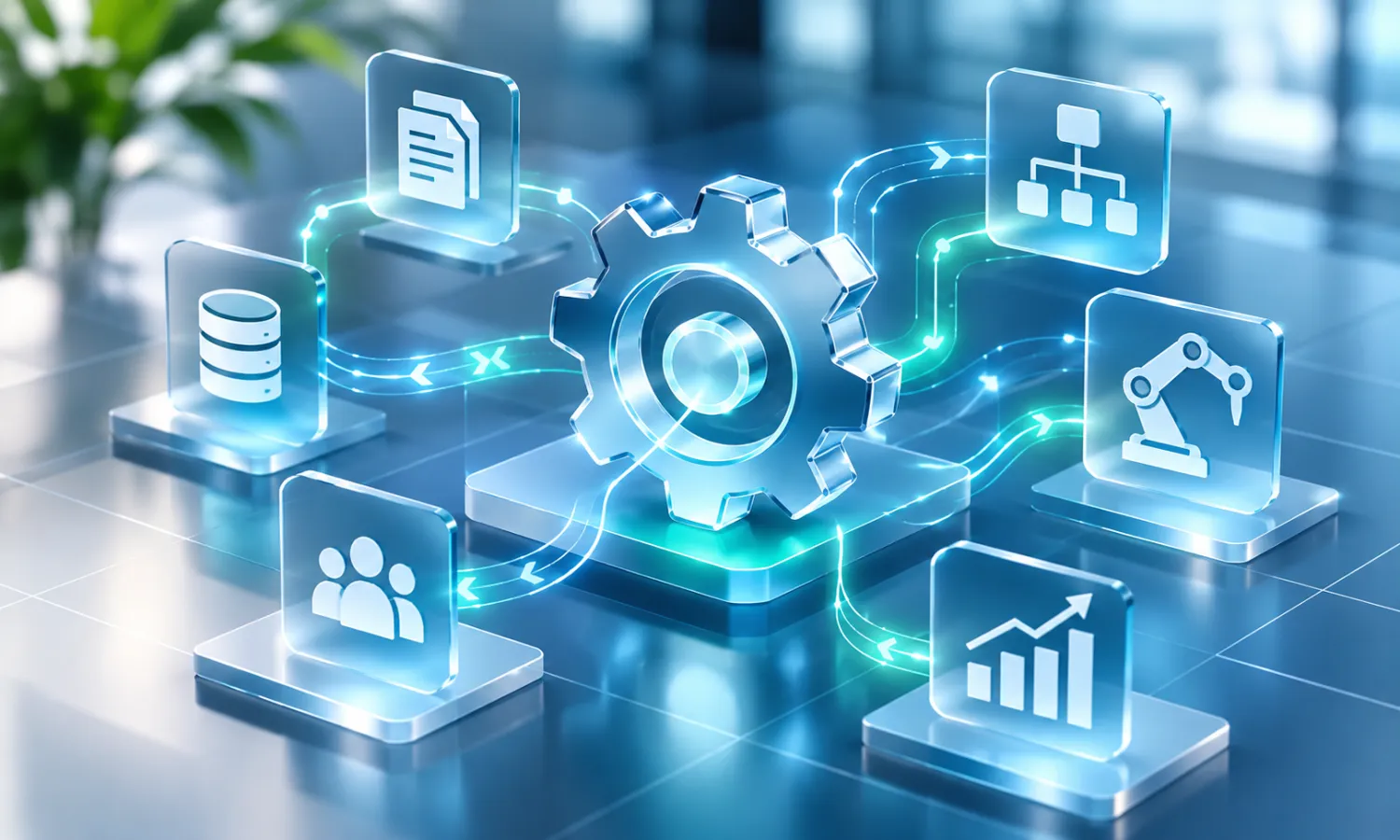

What we do
Intelligent business automation.
Much of the work a business does is repeated: the same forms, the same hand-offs, the same checks, day after day. Intelligent automation removes the manual steps without removing the judgment that should stay with a person.
We look at how the work actually flows, find where it slows down, and redesign it so it runs smoothly. The result is faster, less error-prone work, and more time for the people who do it to do the things that matter.
What is automated
The areas we tend to focus on.
Different workloads suit different approaches. We match the technique to the job.
Business process automation
We identify the steps in a process that are safe to hand to software and remove the manual effort, while keeping control where a person should have it.
Workflow digitisation
We move paper, email and spreadsheet workflows into systems the work can actually live in, so nothing gets lost between tools.
Intelligent document processing
Documents such as invoices, forms and statements are read, organised and checked automatically, so people handle exceptions instead of doing the whole job.
Systems integration
The applications a business runs rarely talk to each other well. We build the links that let information move freely between them.
AI-assisted automation
Where a step needs a judgement call, we add AI that assists the person rather than replacing them, with the right checks in place.
Where to begin
Start with the process that hurts.
The best place to start is usually the process that is slowest, most error-prone or least enjoyable to do. We look at the volume, how often it breaks, and what it depends on, and work out what is realistic to automate and what should stay human.
We are careful not to over-automate. A process forced onto full automation when it should keep a human in the loop creates new problems. We design for the balance.
How it comes together
From the first process to a running system.
A staged approach so the benefits show up early rather than at the end.
Map the work
We follow a process end to end and work out where the time and errors actually come from.
Decide the balance
We work out which steps software should handle and which need a person, and why.
Design the flow
We shape the new process so it fits the systems and the people who will use it.
Build and test
We build it and run it against real work, checking it does not introduce new problems.
Hand it over
We train the team and set up the monitoring, so it keeps running as things change.
In practice
Where this shows up.
Illustrative examples of the kind of work we take on.
Invoices that wait to be entered
A finance team enters the same data by hand. We build a process that pulls it in and checks it, leaving the team to handle only the exceptions.
Orders that pass through many hands
An order moves between systems and spreadsheets before it is complete. We connect the steps so it travels in one go.
Reports that take days
Management wants a picture that is a few days old by the time it is ready. We set up the flow that keeps it current.
Cutting manual work
Tell us where your team gets bogged down.
Share the process that slows you down most. We will help you work out what is realistic to automate, what should stay with a person, and how to get there.